
Bhoomi Shastra
Bhoomi Shastra Vastu Principles Elements
Every element of land is studied through Bhoomi Shastra Vastu Principles to ensure balance, stability, and natural harmony.
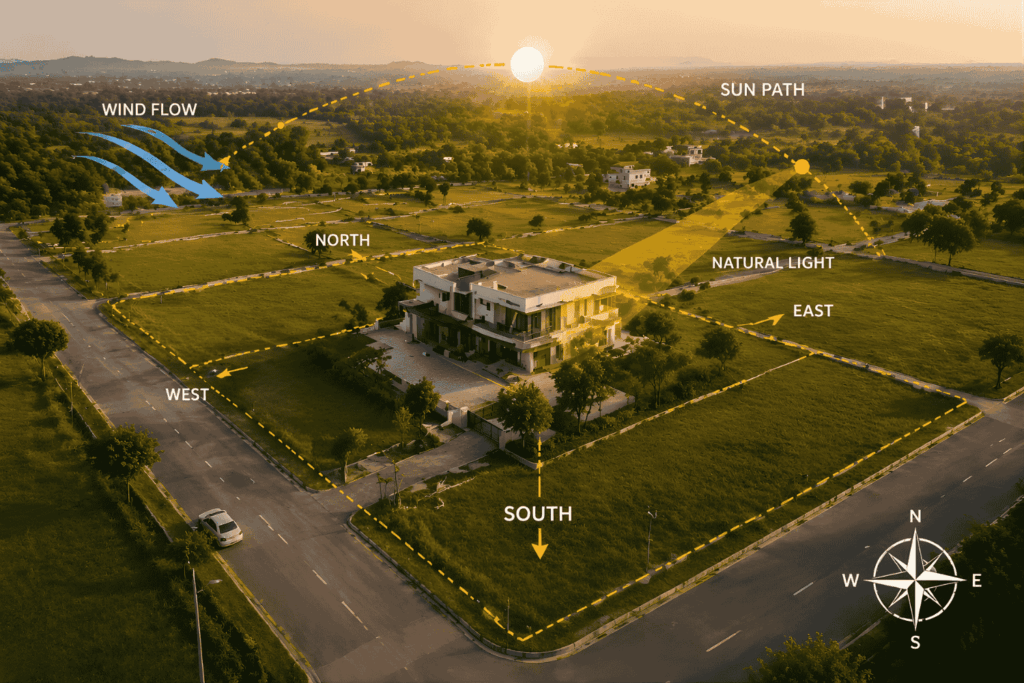
Land Orientation
Plot direction is analyzed to align structures with natural light, wind flow, and elemental balance.

Soil & Earth Quality
Soil is examined for strength, stability, and energy retention to support long-term construction.

Open Space Balance
Built and open areas are planned to allow free movement of air, light, and prana flow.
What Bhoomi Shastra Covers
Each factor is studied under Bhoomi Shastra Vastu Principles to ensure a balanced and supportive environment.
Directional Analysis
Direction is studied to align land with natural energy flow
Land Slope Study
Land slope is analyzed for proper water movement
Soil Strength Check
Soil strength is tested for safe construction
Sun Path Observation
Sun path is observed for light and thermal balance
Wind Flow Assessment
Wind flow is assessed for ventilation
Water Movement Analysis
Water movement is managed to avoid stagnation
Built vs Open Ratio
Built and open ratio is balanced
Central Space Planning
Central space is maintained as Brahmasthana
Environmental Harmony
Environment is aligned with natural harmony
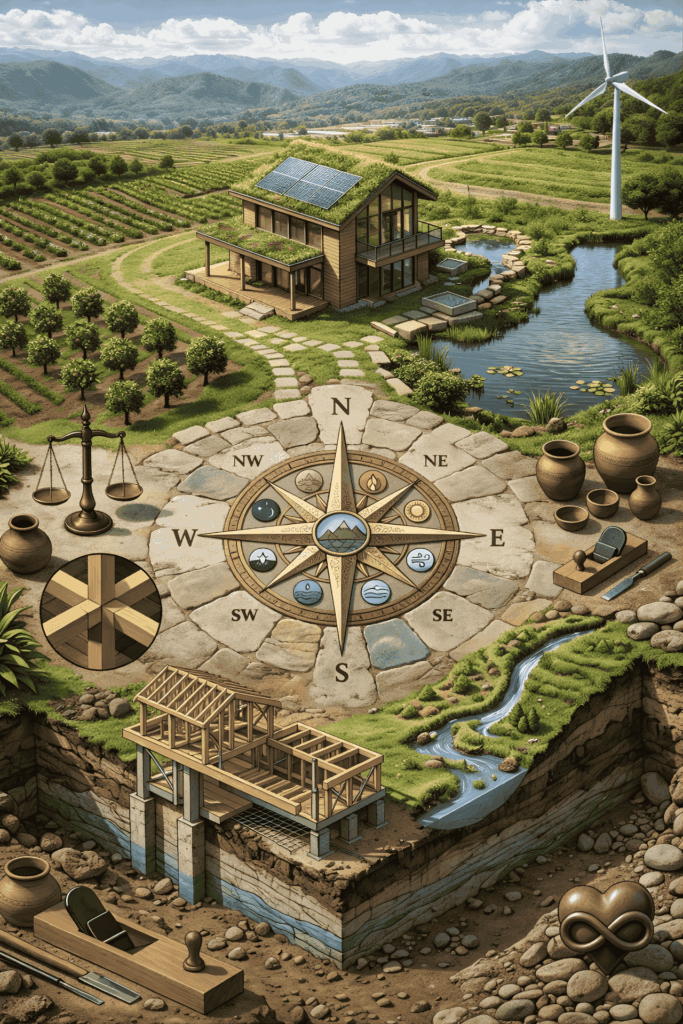
Land That Shapes Lasting Impact.
We design more than structures — we align land with purpose. Our Bhoomi Shastra Vastu Principles ensure every space is planned with logic, balance, and respect for natural forces and pancha bhoota. that influence long-term well-being.
Understanding Bhoomi Shastra Vastu Principles
Bhoomi Shastra Vastu Principles are rooted in the timeless relationship between land, nature, and human life. They go beyond physical observation to understand how the land behaves through direction, soil, slope, and surrounding environment. These principles are guided by the balance of pancha bhoota — prithvi (earth), jala (water), agni (fire), vayu (air), and akasha (space) — which together influence stability, energy flow, and long-term harmony.
In Bhoomi Shastra, land is not treated as a passive surface but as a living foundation that responds to natural forces. The orientation of the plot, the quality of soil, the movement of water, and the path of the sun are all carefully studied to ensure that the space supports growth, clarity, and well-being. The preservation of Brahmasthana, the central space, plays a key role in maintaining equilibrium within the built environment.
These principles are applied with a balance of traditional wisdom and logical understanding, ensuring that planning decisions are both practical and aligned with natural order. Bhoomi Shastra Vastu Principles guide the creation of spaces that remain stable over time, support human activity, and maintain harmony between structure and environment.
Frequently Asked Questions
Here are some common questions about Bhoomi Shastra and how it is applied at CTB.
What is Bhoomi Shastra and how does it work
Bhoomi Shastra Vastu Principles explain land behavior through direction, soil, pancha bhoota, and natural forces. It works by aligning planning and design decisions with these observations to create balanced and stable spaces.
Is Bhoomi Shastra relevant for modern buildings
Yes, Bhoomi Shastra is relevant for modern buildings as it improves light, airflow, and spatial balance. Its principles integrate seamlessly with contemporary architecture and engineering.
At what stage should Bhoomi Shastra be applied
Bhoomi Shastra should be applied at the planning stage before design is finalized. Early application ensures better layout decisions and avoids future corrections.
Does Bhoomi Shastra affect architectural design
It supports logical placement, proportion, and directional alignment. It supports logical placement and proportion while respecting functional requirements.
Reference and Traditional Knowledge
Bhoomi Shastra Vastu Principles are rooted in traditional knowledge systems that study land, direction, and natural forces to ensure harmony and balance in construction. Learn more about Vastu Shastra principles used in land planning and architectural alignment.